TL;DR: SI joint dysfunction causes 15 to 30 percent of chronic low back pain, and it’s routinely mistaken for a disc problem or sciatica. The joint itself barely moves. What goes wrong is usually the muscles controlling it. Acupuncture targets those muscles, which relieves the pain and helps the joint stabilize. Most patients need four to eight sessions.
Acupuncture treats SI joint pain by releasing and restoring the muscles that control the joint, mainly the glutes, the deep hip rotators, the quadratus lumborum, and the abdominal wall. Most patients feel a meaningful difference within three or four sessions. The joint itself moves only a few millimeters, so the problem is almost never the joint in isolation.
The reason this condition is so frustrating is that it looks like other things. It produces pain in the low back, buttock, groin, and sometimes down the leg, which sends most people down a disc or sciatica pathway first. Sacroiliac dysfunction accounts for somewhere between 15 and 30 percent of chronic low back pain, and a lot of those patients spend a long time being treated for the wrong thing. Below we’ll cover how to recognize it, what actually goes wrong, which muscles we treat, and how to tell it apart from what it mimics.
What Does SI Joint Pain Feel Like?
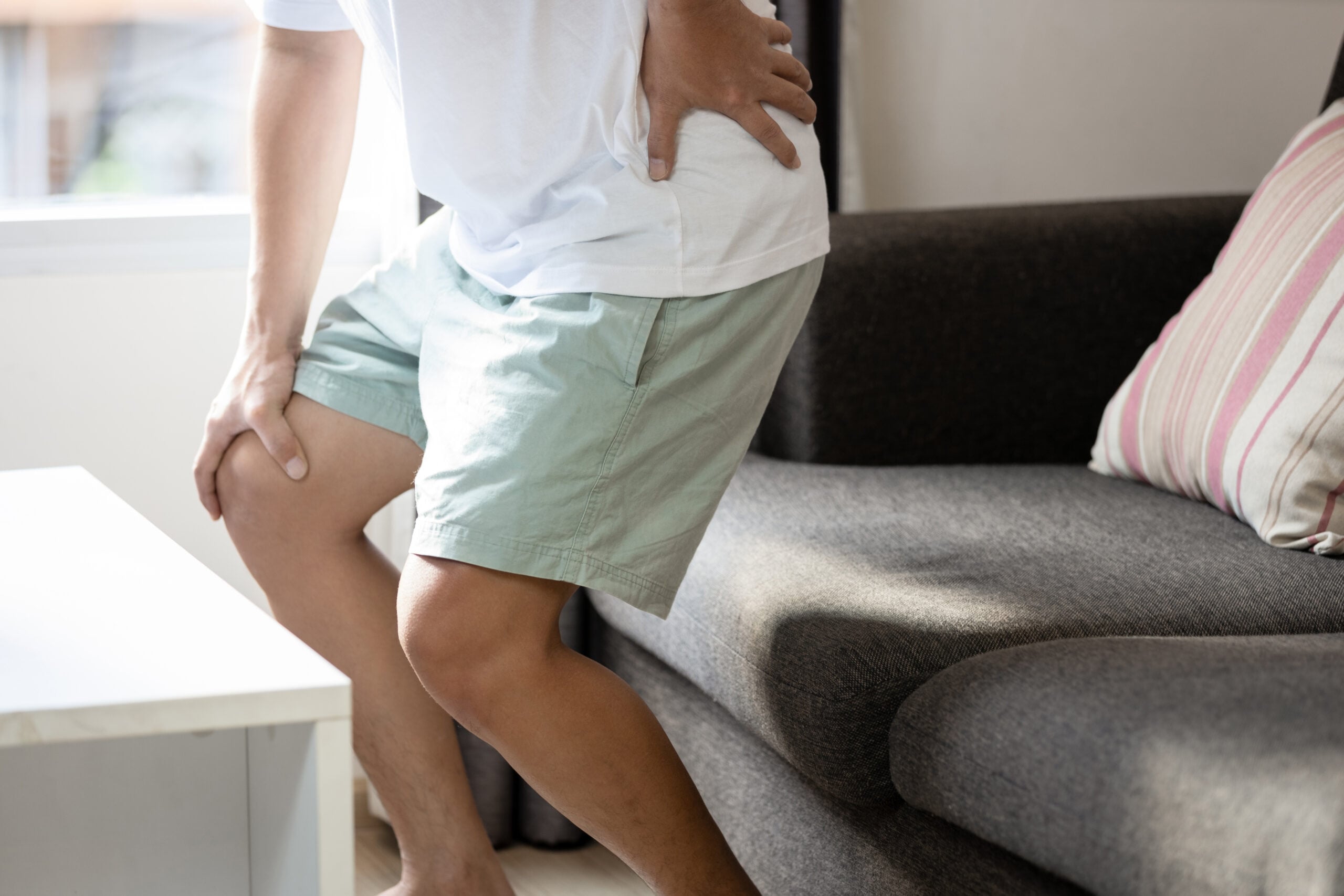
The classic presentation is a deep ache on one side, just below the belt line and slightly off center, often over the dimple at the back of the pelvis. Many patients can cover it with one finger. It’s typically worse with prolonged standing, climbing stairs, rolling over in bed, and standing up from a chair, and it frequently comes with groin pain on the same side.
The one-finger sign is genuinely useful. Disc-related back pain is usually broader and harder to localize. SI pain tends to be pinpointable, and patients point to almost the same spot every time.
Groin pain surprises people. The SI joint refers into the groin often enough that patients get worked up for hip problems or hernias before anyone checks the pelvis.
Pain can travel down the back of the thigh, which is where the sciatica confusion starts. The distinction is that SI referral usually stops above the knee and doesn’t come with numbness or tingling in the foot.
Sitting on one buttock, difficulty putting on socks, and pain that switches sides occasionally are all consistent with SI involvement rather than a disc.
Why Does the SI Joint Start Hurting?
The joint gets irritated when the muscles that stabilize the pelvis stop doing their job evenly. The SI joint has very little inherent mobility and relies almost entirely on surrounding muscle and ligament tension for stability. When one side’s glutes weaken or the abdominal wall stops firing symmetrically, the joint takes load it wasn’t designed to absorb.
Common triggers include pregnancy and postpartum recovery, a fall onto one buttock, a long period of one-sided activity, and simple deconditioning after an injury elsewhere.
There’s often a chain running backward from the pain. A weak gluteus medius on one side causes the pelvis to drop during walking, which loads the SI joint on every step. Treat the joint and you’ll get temporary relief. Treat the glute and the joint gets a chance to settle.
Hypermobility is the other side of it. Some people, particularly after pregnancy, have SI ligaments that are simply too loose. Those cases need stability work rather than release work, and telling the two apart is one of the more important calls we make at the first visit.
How Does Acupuncture Help SI Joint Pain?
We needle the muscles controlling the pelvis rather than the joint itself. Releasing overactive muscles that are pulling the pelvis out of position and restoring activation in the ones that have shut down changes the forces acting on the joint. That reduces the load causing the irritation, and the pain follows.
There’s also a direct local effect. Needling the tissue immediately over the joint reduces the sensitivity of the ligaments and the dense connective tissue in that region, which is where a lot of the pain actually originates.
We often add electrical stimulation for this condition. The deep gluteal muscles respond well to it, and it produces a longer-lasting change than needling alone for a joint that gets loaded with every step you take.
Patients frequently report the relief feels different from what they’ve had before, which makes sense. Most prior treatment addressed the spot that hurt. This addresses what’s loading it.
The Muscles We Treat Most Often
Assessment drives this. We test hip abduction, hip extension, trunk rotation, and single-leg stability side to side, and the asymmetries tell us where to work.
The gluteus medius comes up more than anything else. When it’s weak or inhibited on one side, the pelvis loses its frontal-plane control and the SI joint absorbs the difference. Our article on gluteus medius dysfunction explains how far up and down that chain the effects travel.
The piriformis and the deep hip rotators sit directly over the joint and are almost always tight in these cases. They also refer pain into the buttock in a pattern that overlaps heavily with SI referral, which is part of why the diagnosis gets muddy. We cover them in our piece on piriformis involvement.
The quadratus lumborum pulls the pelvis upward on one side and is a frequent contributor to one-sided pain just above the joint.
The abdominal obliques matter more than most patients expect. They tension the connective tissue that wraps the pelvis, and when they’re not firing evenly the joint loses a meaningful part of its support.
Is It Really the SI Joint?
Three conditions mimic SI pain closely, and treating the wrong one wastes months. Lumbar facet joint irritation produces pain in a similar area but worsens with backward bending rather than single-leg loading. Hip joint problems refer to the groin and worsen with rotation. True sciatic nerve involvement travels below the knee with numbness or tingling.
The tests that help most are simple. If standing on the painful leg alone reproduces the pain, the SI joint is likely involved. If bending backward reproduces it, look at the facet joints, which we cover in our notes on facet joint pain. If rotating the hip inward while lying down reproduces it, the hip is a candidate, and our article on hip pain patterns breaks that down.
Symptoms below the knee with numbness or foot weakness change the plan entirely. Our piece on distinguishing sciatic symptoms covers what to look for.
More than one thing can be true at once, which is common in people who’ve had back pain for years. That’s fine. It just means we treat in order of what’s driving the most symptoms.
What a Treatment Course Looks Like
Expect four to eight sessions, usually weekly. Most patients notice something after the first two or three, and the relief typically lasts progressively longer with each visit. If we’re seeing no change by session five, we reassess rather than continuing.
Early sessions focus on releasing what’s overactive and calming the irritated tissue around the joint. Later sessions shift toward restoring activation in the muscles that tested weak, plus corrective exercise between visits.
The exercise part isn’t optional for this condition. An SI joint that hurts because the pelvis lacks muscular control will keep hurting until that control improves, and needling can’t do that part.
Hypermobile patients get a different plan. We do less release work, more activation work, and we’re careful about aggressive stretching, which makes an unstable joint worse. Patients who’ve been told to stretch their hips for a year and got worse usually fall into this category.
For patients whose pain has spread into a broader lumbar pattern, our overview of chronic low back pain treatment covers the wider approach.
Keeping It From Coming Back
SI pain recurs when the strength asymmetry that caused it never got addressed. That’s the pattern we see in almost every patient who’s had it more than once.
Single-leg work is the core of prevention: step-ups, single-leg bridges, and side-lying hip work, done consistently rather than intensely. Fifteen minutes a few times a week beats an hour once.
Habits matter too. Sitting with your wallet in one back pocket, standing with your weight parked on one hip, and always carrying a bag on the same shoulder all load the pelvis asymmetrically. Small changes there prevent a lot of recurrence.
For patients whose SI pain started with pregnancy, the ligaments usually tighten back up over several months. Stability work through that window makes a real difference in whether the pain resolves or becomes chronic.
The Bottom Line
SI joint pain is common, frequently misdiagnosed, and rarely a problem with the joint itself. It’s a control problem in the muscles surrounding the pelvis, which is why treating the sore spot never quite works. Acupuncture targets those muscles directly, and most people know within four to eight sessions whether it’s the right approach.
If you’ve been treated for a disc or sciatica and nothing has helped, the pelvis is worth checking. At LycoAcu, we test the whole chain before we treat. Learn about our approach to acupuncture, orthopedic acupuncture, and pain management, or reach out to get assessed.