TL;DR: Cupping marks are round spots of discoloration left after suction pulls a small amount of blood from tiny vessels into the tissue just under your skin. They are not bruises, and they are not painful. Darker marks usually point to tighter, more congested tissue, while light or faint marks mean the area was already moving well. Most marks fade in a few days to two weeks. If a mark blisters or hurts, call your practitioner.
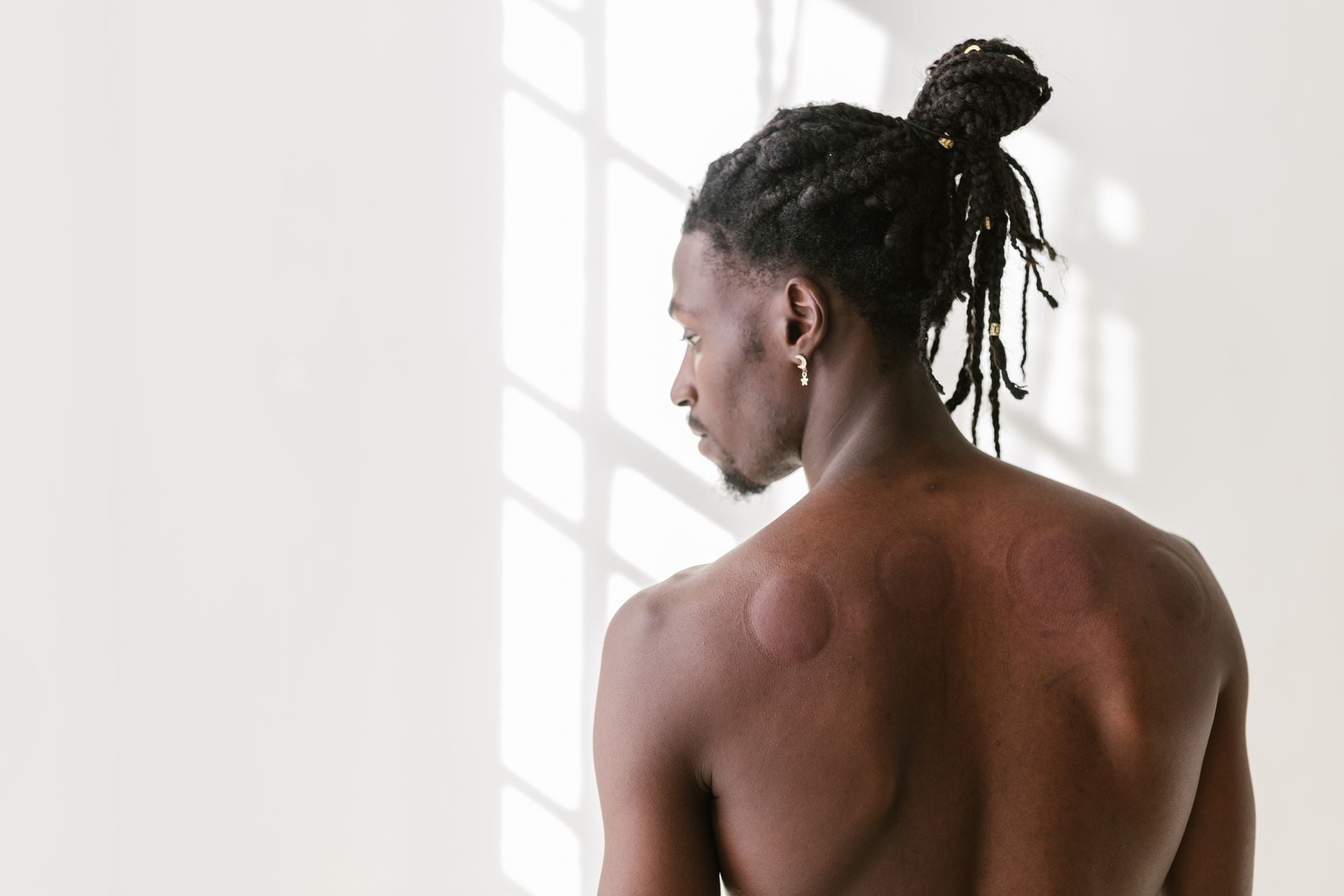
Cupping marks are round patches of color that appear where a cup was placed, caused by gentle suction pulling blood out of small surface vessels into the surrounding tissue. They range from light pink to deep purple, and the shade roughly tracks how tight or congested the muscle underneath was. They are a normal, expected part of treatment, not a sign of injury.
Here’s what most articles on this topic get wrong. They lean hard on old ideas about “toxins” and “energy” and skip the actual biology of what’s happening in your skin. We think you deserve the real explanation. Below, we’ll walk through what these marks physically are, why the colors differ, how long they stick around, and when a mark is worth a phone call.
Are Cupping Marks Actually Bruises?
No. A bruise comes from blunt force, like banging your shin on a table. Cupping marks come from suction, which gently lifts the skin and pulls a small amount of blood out of tiny surface vessels. There’s no impact and no deep tissue damage, which is why cupping marks usually don’t hurt to touch.
The medical name for this kind of discoloration is ecchymosis. It simply means blood has leaked from small vessels into the space just under the skin. A real bruise involves the same leaking, but it’s triggered by trauma that also damages the tissue around it.
That difference matters. A forensic study published in 2025 examined circular skin marks that were first mistaken for injury. When doctors looked beneath the skin, they found the marks came from superficial capillary rupture with no deeper tissue damage at all. That’s the physical signature of cupping: color at the surface, healthy tissue underneath.
There’s another giveaway. Bruises are usually tender and often turn green and yellow as they heal. Cupping marks are typically painless and fade more evenly. So even though the two can look alike, your body treats them very differently.
Why Does Cupping Leave Marks in the First Place?
Cupping leaves marks because the suction creates negative pressure that pulls skin and the top layer of muscle up into the cup. This stretches tiny blood vessels until a few of them release a small amount of blood into the tissue. That pooled blood is the color you see.
Think of it like a reverse massage. Instead of pressing down into a tight muscle, cupping lifts the tissue upward. This is the same idea behind hands-on techniques that free up stuck fascia, the thin sheet of connective tissue that wraps your muscles, helping those layers slide against each other more freely.
The amount of color depends on how the tissue responds. In a healthy, well-circulated area, the vessels stretch and mostly hold. Little blood escapes, so the mark is faint. In a tight, congested area, more blood is sitting near the surface and the vessels give up more of it. The mark comes out darker.
This is why the same person can get a deep purple mark on one shoulder and a light pink one on the other. The cup and the suction were the same. The tissue underneath was not.
What Do the Different Cupping Mark Colors Mean?
The color of a cupping mark reflects how much blood pooled near the surface, which tends to track how tight or sluggish the tissue was. Lighter marks point to healthy, mobile tissue with good blood flow. Darker marks point to tighter areas where circulation was more restricted. The color is a clue, not a diagnosis.
Here’s a simple guide to what we typically see:
- Light pink or no mark at all: The tissue was already moving well with good circulation. These fade fast, often within hours.
- Light red: Mild muscle tightness or minor tension. Usually gone in a few days.
- Dark red: Moderate tension, often in an area you’ve been overusing or holding stress.
- Purple or blue: Tighter, more congested tissue, sometimes tied to a long-standing tension pattern. These take the longest to clear.
- Brown or gray: Often shows up over spots with an older history of tightness or past strain.
We want to be honest with you about one thing. The color gives us useful feedback, but it is not a medical readout of your health. A deep purple mark does not mean you’re sick, and a pale mark does not certify perfect health. It’s a snapshot of how that specific patch of tissue responded on that specific day.
Several everyday factors also shift the color. Thinner skin marks more easily. Dehydration, recent hard exercise, and blood-thinning medications can all make marks darker or last longer. So can where you are in a healing cycle. That’s why we read the marks alongside the rest of your exam, not on their own.
How We Use Cupping Marks to Guide Treatment
We treat cupping marks as one piece of information among several. The pattern and depth of color help us see where tissue was most restricted, and we pair that with our hands-on exam and strength testing to build the full picture. That combination is what actually guides care.
For example, if you come in with stubborn neck and shoulder tightness and the darkest marks land right over your upper traps, that lines up with what we often see in people carrying tension there. We frequently apply cupping when patients have tight bands and knots between the shoulder blades that keep coming back even after stretching and massage.
Those knotted spots are a big reason people notice such dark marks over certain muscles. When a muscle has been gripping for a long time, the tissue underneath is congested, so more blood pools at the surface during suction. It’s the same reason we reach for cupping and needling when we’re trying to release stubborn muscle knots that haven’t let go on their own.
Marks also help us track progress. On your first visit, the color over a problem area might be dramatic. A few sessions in, the same spot often marks lighter and clears faster. That shift tells us the tissue is moving better, which is exactly what we’re after. Fading marks over time are a good sign, not a sign the treatment stopped working.
Athletes often lean on cupping for recovery, which is why you’ll spot round marks on Olympic swimmers and lifters. If you train hard, it’s worth understanding how cupping helps athletes bounce back between sessions, since the same marks that look dramatic are tied to the increased blood flow that supports recovery.
How Long Do Cupping Marks Last?
Most cupping marks fade within three to seven days. Deeper marks over tighter tissue can take up to about two weeks. The darker the mark on day one, the longer it usually takes to clear, because there’s more pooled blood for your body to reabsorb.
Your circulation drives the timeline. People with strong blood flow tend to clear marks faster. Staying hydrated helps, since your body is literally reabsorbing and processing that small amount of pooled blood. A few simple steps speed things along.
- Drink plenty of water before and after your session.
- Keep the treated area warm and avoid ice on it right after.
- Skip very hot showers or baths for a few hours.
- Rest if you feel tired, which is common and completely normal.
- Avoid hammering the same area with intense exercise for a day.
One practical heads-up. Cupping marks can be visible on the neck, shoulders, and back, so if you have an event coming up, plan the timing or ask us to work areas that clothing will cover.
When Should You Actually Worry About a Cupping Mark?
Most of the time, you shouldn’t worry at all. Cupping marks are painless, expected, and temporary. You should reach out to your practitioner if a mark blisters, becomes genuinely painful, breaks the skin, or hasn’t started fading after about two weeks.
These reactions are rare, and they usually trace back to suction that was too strong or left on too long. When cupping is done by a trained, licensed provider, it’s very safe. That’s a big reason we stress working with someone who does this every day and knows how to read your skin and adjust.
A quick word on marks that appear without much suction. If you bruise very easily or take blood thinners, tell us before we start. We’ll adjust the pressure and cup time so you get the benefit without heavy marking. We always tailor intensity to your body, especially in areas that are already sensitive.
It’s also worth knowing what’s normal right after. Mild soreness, a warm feeling, or slight tiredness are all common and pass quickly. This is similar to how some soreness after acupuncture is normal and usually fades within a day. Sharp pain, spreading redness, or anything that feels off is not typical, and it’s always fine to call and ask.
Does Everyone Get Cupping Marks?
Not always. Some people mark heavily, others barely at all, and the same person can react differently on different days or body areas. Light marking doesn’t mean the treatment failed, and heavy marking doesn’t mean it worked better. It mostly reflects your tissue, your circulation, and the type of cupping used.
The technique matters here. Static dry cupping, where cups stay in one place, tends to leave the clearest marks. Moving or “gliding” cupping, where we slide the cups along the skin with oil, usually leaves much lighter marks because no single spot gets sustained suction.
Your baseline plays a role too. Skin thickness, hydration, recent activity, and medication all shift how much you mark. The type of treatment matters as well, since cupping is often just one piece of a session. We frequently combine cupping and massage with acupuncture in the same visit, and gliding the cups or easing the suction keeps marking lighter when that’s the goal.
So if you and a friend both get cupped and your marks look totally different, that’s expected. Two bodies, two circulation patterns, two different results. Neither is wrong.
The Bottom Line on Cupping Marks
Cupping marks are a normal, harmless response to suction, not bruises and not a cause for alarm. The color offers a useful clue about how tight or congested the tissue was, and lighter marks over time are a sign your body is responding well. Painless marks that fade within a couple of weeks are exactly what we expect to see.
If you’re dealing with stubborn muscle tension, recurring knots, or nagging pain that hasn’t budged, cupping can be a valuable part of a bigger plan. At LycoAcu, our licensed practitioners combine cupping with treatments like acupuncture and soft tissue mobilization, guided by a full strength assessment rather than guesswork. Serving Williamsport, Muncy, and communities across central and northeastern Pennsylvania, we’ll build a plan around your body and your goals. Reach out to our team to get started, and let’s get you moving and feeling better.