TL;DR: After dry needling, keep moving gently, put heat on sore spots, drink water, and skip hard workouts on the treated muscles for about 24 hours. Soreness usually peaks the next day and fades within 48 hours. Call us if it lasts past three days. Get emergency care for chest pain or shortness of breath after needling near the ribs. What you do between visits decides how long your relief lasts.
After dry needling, the best thing you can do is stay lightly active, use heat on any sore muscles, and avoid intense exercise on the treated area for the rest of the day. Most people feel achy for 24 to 48 hours, a lot like the day after a hard workout. By day three, the treated muscle should feel looser than it did before your visit.
Here’s what most aftercare sheets skip: the right plan depends on which muscle we treated and why. A runner with tight calves needs different advice than an office worker with a stiff neck. Below, we’ll cover what’s normal, what helps, how aftercare changes by body area, and the few warning signs that mean you should call us.
How Long Will You Be Sore After Dry Needling?
Most people feel sore for 24 to 48 hours after dry needling. The ache usually starts a few hours after your session and peaks the next morning. It feels like a bruise or a tough workout deep in the treated muscle. Soreness that lasts longer than 72 hours is uncommon and worth a call to our office.
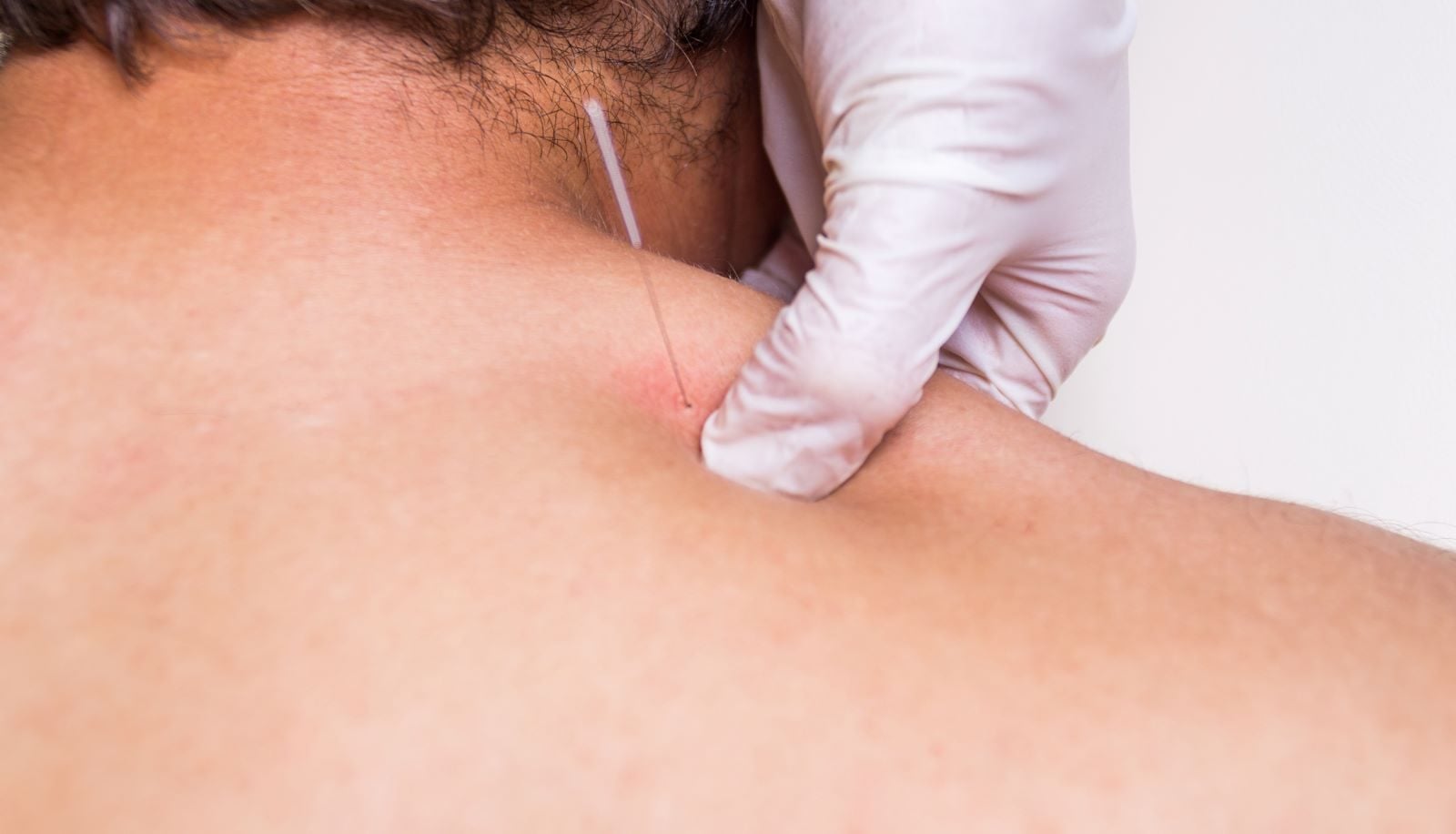
The soreness has a clear cause. When the needle reaches a trigger point (a tight, irritated knot inside the muscle), the muscle often twitches and then lets go. That creates a little irritation in the tissue, and your body sends extra blood flow to repair the area.
That same repair process is what loosens the muscle. So the ache isn’t a sign that something went wrong. Some patients describe it as a deep, bruised feeling, and we explain why muscles feel sore after dry needling in more detail elsewhere.
How sore you get depends on the muscle and its history. Large muscles like the glutes tend to ache more, and your first session is usually the most noticeable. At your next visit, tell us how long the soreness lasted so we can adjust how many needles we use and how deep we go.
What Should You Do in the First 24 Hours After Dry Needling?
In the first 24 hours after dry needling, move the treated area gently every hour or so, use heat for 15 to 20 minutes at a time, drink plenty of water, and get a full night’s sleep. Avoid heavy lifting, long stretches of sitting, and hard training for the muscles we worked on.
Gentle movement matters more than people expect, because total rest tends to make a freshly treated muscle stiffen up. Short walks and easy range-of-motion work keep blood flowing and help the muscle settle into its looser length. For a neck, try slow head turns. For the low back, a 10-minute walk works well.
You’ll hear that water “flushes toxins” after treatment. Dry needling doesn’t release toxins, but water still helps muscles recover and can ease the lightheaded feeling a few people get afterward.
Sleep is when your muscles do most of their repair work, so protect it that night. A hot shower often feels great. We’d skip heavy drinking that evening, since alcohol disrupts sleep and can make bruising worse.
Heat, Ice, and Pain Relievers After Treatment
For general muscle soreness, heat is usually the better choice. It increases blood flow and helps tight tissue relax. A heating pad, a warm bath, or a long hot shower all work. Keep it to 15 to 20 minutes, and never so hot that your skin turns red or stings.
Ice has a narrower job. If a bruise shows up or one spot is tender to the touch, a wrapped cold pack for 10 to 15 minutes on the first day can calm it down. Bruising is more likely if you take blood thinners or high doses of fish oil, so let us know about those before your session.
Pain relievers are a question for your doctor or pharmacist. Either way, keep taking any medications you’ve been prescribed. Light self-massage or gentle foam rolling is fine the next day, but don’t dig into the needled spot on the same day.
Can You Work Out or Run After Dry Needling?
Yes, light exercise is fine after dry needling, and it often helps. Walking, easy cycling, and mobility work are good choices the same day. Save heavy lifting, sprints, and long runs that load the treated muscles for 24 to 48 hours, or until the soreness fades.
Runners ask us about this more than anyone. An easy jog is usually fine once the ache settles, but a speed workout the same day is asking for trouble. We cover running after dry needling in a separate guide.
If you lift, train the parts of your body we didn’t treat. Needled your shoulders? Leg day is fine. Use one simple rule for everything: if an exercise makes the treated spot sharper during or after the session, stop and give it another day.
Timing matters for competitive athletes. We don’t recommend a first session within 48 hours of a race or game, because you don’t know yet how your body responds. Once we know your pattern, we can plan treatments around your schedule, which is how athletes use dry needling to recover between events without losing training time.
Aftercare Changes Based on Where We Needled
Here’s how we coach patients based on the area we treated:
- Neck and upper shoulders: Limit long stretches of looking down at a phone or laptop, and avoid carrying heavy bags on that side. If you can’t turn your head comfortably to check your blind spot, wait before driving.
- Low back and glutes: Get up and walk every 30 to 45 minutes instead of sitting for hours. Sleeping on your side with a pillow between your knees takes pressure off sore muscles.
- Hips and thighs: Skip deep squats and lunges for the rest of the day.
- Calves and feet: Leave hills and speed work for later in the week. Wear supportive shoes. A brief calf cramp the first night can happen, and a gentle stretch usually settles it.
If we added gentle current to the needles, expect a little more soreness than usual. Dry needling with electrical stimulation makes the muscle contract over and over, so it’s worked harder and may need an extra day before heavy use.
When Should You Call Us or See a Doctor?
Call us if soreness lasts longer than three days, a bruise keeps growing, or numbness or tingling sticks around for more than a couple of days. Get emergency care right away if you have chest pain or trouble breathing after needling near your upper back, shoulders, or ribs.
That last warning is about pneumothorax, a rare complication where a needle near the chest wall lets air leak around the lung. It’s uncommon in trained hands, but it can show up hours after a session. Watch for sharp chest pain that worsens with a deep breath, shortness of breath, or a dry cough, and go straight to the emergency room.
Infection is extremely rare with sterile, single-use needles, but call us if a needle site turns red, warm, or swollen, or if you run a fever.
Feeling tired or a little “off” for a few hours is normal. For a full rundown, see our guide to the less common side effects of dry needling.
How to Make Your Dry Needling Results Last
Dry needling releases a tight muscle, but it doesn’t fix the reason the muscle got tight. If a weak hip is making your low back work overtime, the back will tighten up again within weeks.
Before treatment, we run a full strength assessment using the EXSTORE system, which Dr. Anthony Lombardi developed to test and treat muscles that aren’t firing properly. That testing tells us which muscles need releasing and which need strengthening. Then we give you a short home program.
The day after a session is the best time to do those exercises, while the muscle is calm and loose. Keep a quick log of how long the soreness lasted, your pain on a 0 to 10 scale, and what felt easier. Most people need a short series of sessions, and that log helps us get you there faster.
Give Your Body a Day, Then Get Back to Living
A day or two of soreness is a normal part of the process. Move gently, use heat, hydrate, and skip hard training on the treated muscles for about 24 hours. Know the warning signs, and pair your treatment with the right exercises so the results stick.
At LycoAcu, we build every plan around your body and your goals. Learn more about our dry needling treatment, our corrective exercise programs, and our strength assessment. Ready to feel looser and move better? Contact us or call 570-244-4188 to book your visit.