TL;DR: Dry needling usually doesn’t hurt going in. The needle is hair-thin and solid, and most people barely register it. What people remember is the twitch response, a quick involuntary muscle cramp that lasts a second or two when the needle reaches a trigger point. It’s brief, it fades fast, and it’s the part of the treatment that actually releases the muscle.
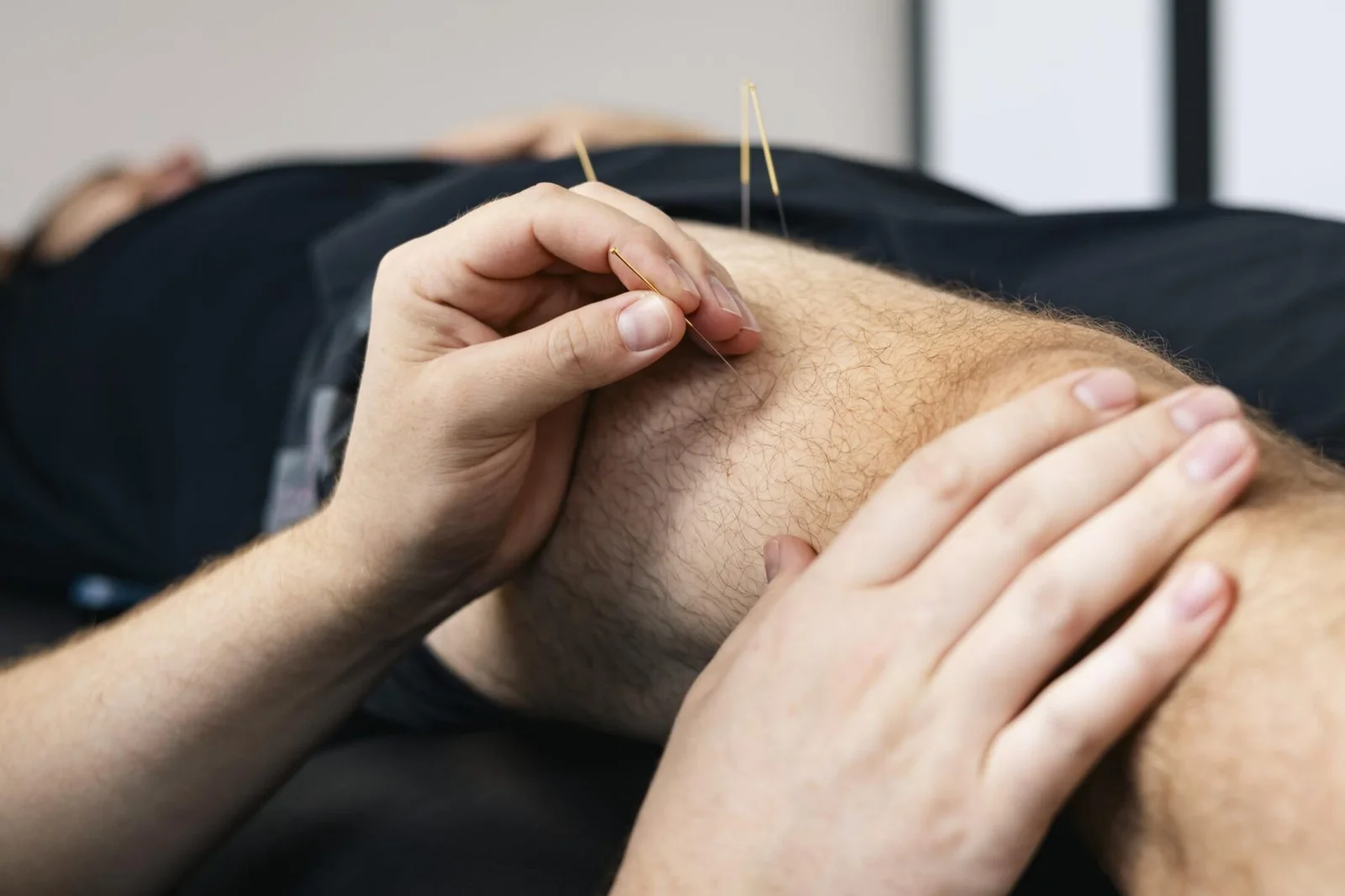
Dry needling is uncomfortable for a couple of seconds at a time, not painful in the way most people picture. The needle itself is about 0.25 mm across and solid, so it slips between tissue fibers rather than cutting through them. Most patients don’t feel the insertion at all. What they feel is what happens next.
Here’s the part that gets left out of most explanations: the sensation people describe as the “hurt” of dry needling isn’t the needle. It’s your own muscle contracting. That distinction matters, because it changes what you should expect, how long it lasts, and what it means when you feel it. Below we’ll break down the twitch response, which muscles tend to run hot, how the soreness afterward compares to a workout, and what to do if a session feels like too much.
What Does Dry Needling Feel Like Step by Step?
You’ll feel three distinct things, and they arrive in order. First, a light tap or brief prick as the needle passes the skin, over in a fraction of a second. Second, a deep, dull ache or pressure as the needle reaches the muscle. Third, if we hit the trigger point cleanly, a quick cramping twitch that releases within a second or two.
The first sensation is minimal because of how the needle is designed. Nearly all of your pain receptors sit in the top layer of skin. We use a guide tube to tap through that layer fast, and there’s no fluid being injected, so nothing is stretching the tissue from the inside.
The deep ache is a different animal. That’s the needle contacting muscle tissue that’s already irritated. Patients often say it recreates the exact pain they came in for, which sounds alarming and is actually useful. It tells both of us we’re in the right place.
The twitch is the one people remember, and it deserves its own section.
Why Does the Twitch Response Feel Like a Cramp?
Because it is one. A local twitch response is your muscle firing involuntarily when the needle reaches a taut band of tissue. It feels like a fast, deep charley horse that grabs and lets go within about two seconds. Once it releases, the area usually feels looser and lighter than it did a moment before.
A trigger point is a small patch of muscle fibers stuck in a contracted state. The fibers can’t relax on their own, blood flow to the area drops, and waste products build up locally. That’s why the spot stays sore for weeks and why stretching often doesn’t touch it.
The needle interrupts that loop mechanically. The twitch is the muscle discharging and resetting. After it fires, the taut band lengthens, circulation returns, and the local chemistry starts to normalize. You’re trading two seconds of cramping for a muscle that isn’t stuck anymore.
Some muscles twitch dramatically and some barely move. The glutes, calves, and quads tend to produce big visible responses. Smaller muscles in the forearm or around the shoulder blade often give a subtler one. Neither predicts how well you’ll respond. If you want the mechanics in more detail, our explanation of what the needle does inside a knotted muscle covers the tissue changes.
Which Muscles Hurt the Most During Dry Needling?
The muscles patients rate as most intense are usually the upper trapezius, the calves, the muscles along the shin, the glutes, and the small muscles of the hand and foot. Density of nerve endings drives a lot of this, and so does how irritated the muscle already was. A chronically guarded muscle always feels more than a healthy one.
Bony areas and thin tissue tend to feel sharper. The shin, the top of the foot, and the area around the ankle have less muscle bulk to cushion the needle. We usually go shallower in those places and use fewer needles.
Thick, well-padded muscle is the opposite. Needling the mid-back, hamstrings, or lats often produces almost nothing until we reach the trigger point itself.
There’s also a timing factor most articles skip. If we treat a muscle that’s in an acute flare, everything feels louder. Sometimes the right call is to treat the muscles around it first, calm the system down, and come back to the angry one next visit. We make that call during the strength assessment, not mid-session.
Does Adding Electrical Stimulation Make It Hurt More?
No, and most patients prefer it. Once the needles are placed, we can attach small clips and run a gentle current between them. The sensation changes from an ache to a rhythmic tapping or pulsing, and we set the intensity together. You tell us when it’s strong enough, and we stop there.
The current keeps the muscle cycling through light contractions for the length of the session, which extends the effect of the needling and tends to produce a longer-lasting release. For chronic tightness that keeps coming back within a few days, it’s often the difference between temporary relief and something that holds.
Patients who are nervous about the twitch response frequently find electrical stimulation easier to tolerate, because the sensation is steady and predictable rather than sudden. We cover the setup in our piece on combining needles with electrical current.
You stay in control of the dial throughout. If it starts to feel like too much, we turn it down.
How Sore Will You Be Afterward?
Expect some soreness in the treated area for 24 to 48 hours, similar to the deep ache you’d feel the day after a hard lifting session. It’s typically mild and responds well to heat and gentle movement. Roughly a third of patients feel almost nothing afterward, and a smaller group feels it for a full two days.
Light bruising happens sometimes, particularly in the forearms, shins, and shoulders where small vessels sit near the surface. It’s cosmetic and clears within a few days.
What helps: a heating pad, easy movement through the treated range, water, and skipping a maximal training session that evening. What doesn’t help: ice, which tends to stiffen the tissue we just worked to loosen, and complete rest, which lets the muscle settle back into its guarded pattern.
Athletes ask us constantly about training around treatment. The short version is that easy movement is good and hard efforts should wait a day, which we break down in our notes on when it’s safe to run after a session and what the timeline looks like for athletes in season.
What If It Hurts Too Much?
Tell us immediately. We remove a needle in about two seconds, and there’s no downside to asking. We can go shallower, use fewer needles, skip the twitch response entirely, or work on surrounding muscles instead. Nobody has to prove anything on our table.
Dry needling doesn’t have to be aggressive to work. There’s a version of this treatment that involves gentle placement without hunting for a twitch, and for sensitive patients or acutely inflamed tissue, that’s often the better choice for the first few sessions.
A few things genuinely warrant stopping: pain that keeps building rather than settling, a sharp electric sensation that shoots down a limb and doesn’t stop when the needle comes out, or any trouble breathing. These are rare in trained hands, and we screen for the anatomy that matters before we place anything near the ribcage or neck.
Communication is what separates a productive session from a rough one. Patients who tell us what they’re feeling get better-calibrated treatment, and they leave feeling better. The full picture of what the technique can and can’t do is worth reading before your first visit.
The Bottom Line
Dry needling is briefly uncomfortable and rarely painful. The insertion is close to unnoticeable, the deep ache lasts seconds, and the twitch that people brace for is a fast muscle cramp that leaves the area looser than it was. Post-treatment soreness feels like a workout, not an injury, and it’s usually gone in two days.
If tight muscles have stopped responding to stretching, massage, or rest, this is the tool that reaches what those approaches miss. At Lycoming Orthopedic & Sports Acupuncture, every session starts with a full strength assessment so we treat the muscles actually causing the problem. Read more about our approach to dry needling and sports therapy, or reach out with questions before you book.