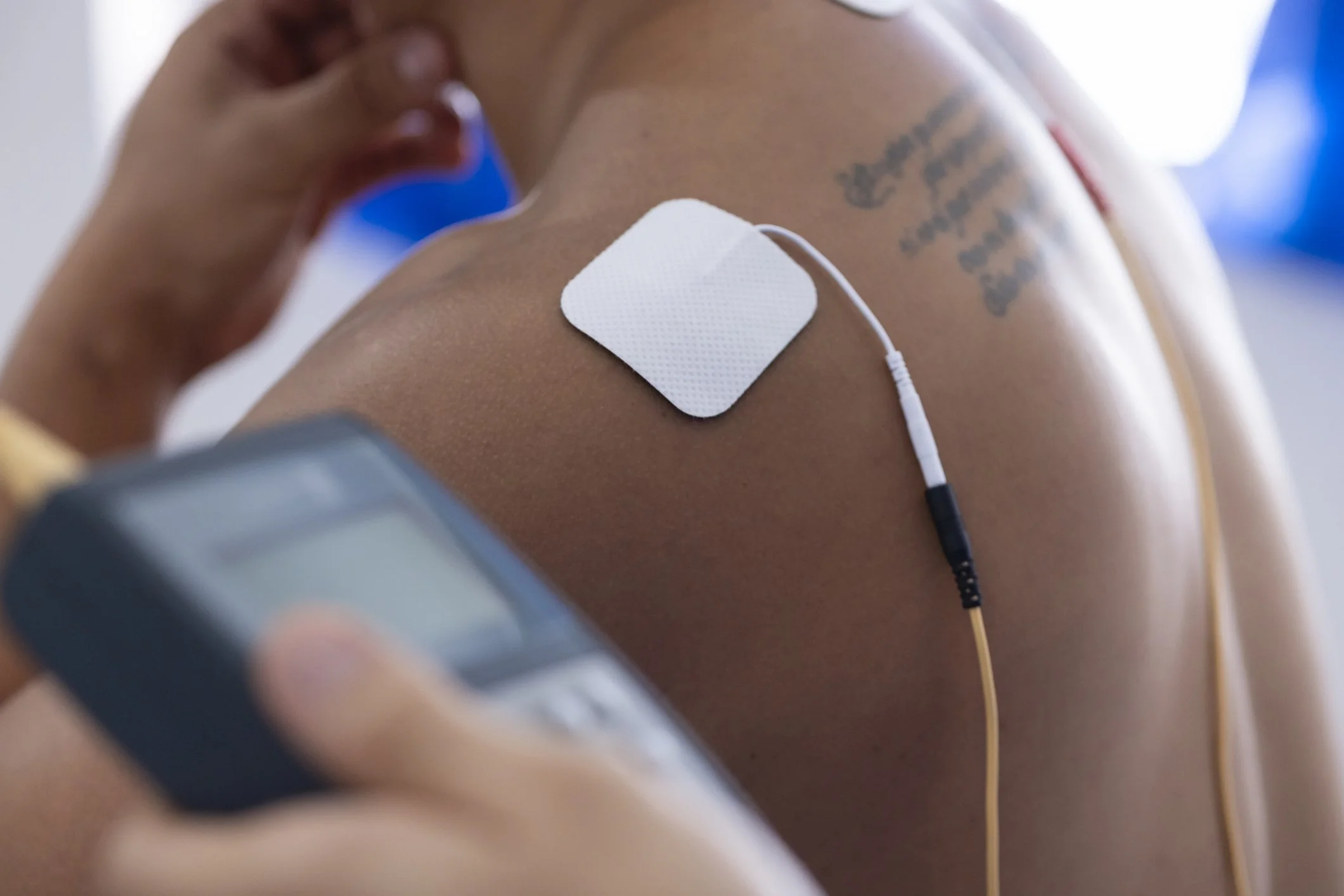
As practitioners dedicated to helping you recover from injury and perform at your best, we’re constantly exploring the most effective treatment approaches available. Electrical muscle stimulation, also known as EMS or neurofunctional acupuncture, represents one of the most significant advances in therapeutic care. This technology has transformed how we address everything from chronic pain to athletic performance optimization.
If you’ve ever wondered how applying electricity to your muscles can actually help them heal and grow stronger, you’re not alone. Many of our patients are curious about the mechanism behind this treatment before their first session. Understanding how electrical muscle stimulation works not only helps you feel more comfortable with the process but also allows you to appreciate the sophisticated science behind this remarkably effective therapy.
In this guide, we’ll break down the physiological mechanisms that make electrical stimulation so effective for pain relief, muscle rehabilitation, and improved function.
The Science Behind Electrical Muscle Stimulation
Your muscles don’t move on their own. Every voluntary movement you make begins with an electrical signal from your brain that travels down your spinal cord and through your motor nerves. When this electrical impulse reaches a muscle fiber, it triggers a chemical reaction at the neuromuscular junction that causes the muscle to contract. This entire process happens in milliseconds, allowing you to move seamlessly through your daily activities.
Electrical muscle stimulation works by mimicking this natural process. Instead of your brain generating the electrical signal, a specialized device delivers controlled electrical impulses through electrodes placed on your skin. These impulses travel to the underlying motor nerves and activate them in much the same way your brain would. The result is an involuntary muscle contraction that produces therapeutic effects throughout your musculoskeletal system.
Research has demonstrated that this type of stimulation engages both peripheral muscles and central nervous system pathways. Studies show that EMS activates corticomotor pathways, meaning the effects extend beyond simple muscle twitching to include neurological adaptations that support long-term healing and improved function. This is particularly valuable when treating chronic pain conditions that involve both muscular dysfunction and nervous system dysregulation.
How Electrical Stimulation Produces Muscle Contractions
The key to effective electrical muscle stimulation lies in targeting the right locations. Motor points are specific areas where motor nerves enter the muscle and where electrical stimulation produces the most efficient contraction. When we place electrodes over these motor points, we can activate entire muscle groups with relatively low amounts of electrical current.
During stimulation, the electrical current causes the muscle to contract and then relax in a controlled cycle. This rhythmic contraction and relaxation pattern improves circulation, reduces muscle tension, and promotes healing at the cellular level. The process essentially replicates what happens during exercise, which is why some researchers refer to electrical stimulation as passive exercise for muscles that may be too weak or painful to exercise voluntarily.
One important distinction between electrically stimulated contractions and normal voluntary contractions involves muscle fiber recruitment. When you voluntarily contract a muscle, your body first activates slow-twitch fibers and then progressively recruits fast-twitch fibers as more force is needed. Electrical stimulation tends to activate fast-twitch muscle fibers first, which are responsible for generating power and speed. This characteristic makes EMS particularly effective for treating muscle inhibition and restoring strength to weakened muscles.
Therapeutic Frequencies and Parameters
Not all electrical stimulation produces the same effects. The frequency of the electrical impulses, measured in Hertz (Hz), significantly influences the therapeutic outcome. Current research suggests that frequencies between 50 and 75 Hz are most effective for producing strength gains and neuromuscular adaptations.
Lower frequencies, typically between 2 and 10 Hz, are often used for promoting endurance and reducing muscle fatigue. These settings can be particularly helpful when addressing conditions that affect sustained muscle function. Higher frequencies generate stronger contractions and are better suited for strength building and activating inhibited muscle groups.
Beyond frequency, we also consider pulse duration and intensity when customizing treatment. Smaller muscles respond well to shorter pulse durations around 150-200 microseconds, while larger muscle groups like the quadriceps may require durations of 200-300 microseconds. We carefully adjust these parameters based on your specific condition, treatment goals, and comfort level. This individualized approach ensures you receive the precise stimulation needed to address your unique concerns, whether you’re recovering from a sports injury or managing chronic dysfunction.
Key Benefits of Electrical Muscle Stimulation
The therapeutic benefits of electrical muscle stimulation extend far beyond simple muscle strengthening. Research has identified several physiological mechanisms that contribute to its effectiveness across a wide range of conditions.
Pain relief represents one of the most significant benefits of EMS therapy. When electrical impulses stimulate your nerves, they trigger the release of endorphins, your body’s natural pain-relieving chemicals. This endogenous opioid response can provide substantial relief for both acute and chronic pain. Additionally, the electrical stimulation helps modulate pain signals traveling to your brain, essentially interrupting the pain pathway and reducing your perception of discomfort. For patients dealing with nerve-related pain, this dual mechanism of action can be particularly valuable.
Preventing muscle atrophy is another crucial application. When injury, surgery, or illness prevents you from using certain muscles, they begin to weaken and shrink remarkably quickly. Electrical stimulation allows us to maintain muscle mass and function even when you cannot exercise those muscles voluntarily. Studies have shown that EMS can increase muscle mass by approximately one percent and improve muscle function by 10-15 percent after five to six weeks of consistent treatment. This makes it an essential tool for post-surgical rehabilitation and recovery from conditions that limit mobility.
Improved circulation and healing round out the primary benefits. The rhythmic muscle contractions created by electrical stimulation act as a pump, driving blood flow into and out of the treated area. This enhanced circulation delivers oxygen and nutrients needed for tissue repair while removing metabolic waste products that can slow healing. For conditions involving inflammation, this improved blood flow can significantly accelerate recovery.
Conditions That Respond Well to Electrical Stimulation
Electrical muscle stimulation has proven effective for a remarkably diverse range of conditions. Patients seeking relief from musculoskeletal issues frequently benefit from this therapy, including those dealing with frozen shoulder, plantar fasciitis, tennis elbow, and sciatica.
Post-surgical patients often find electrical stimulation invaluable for maintaining muscle function during recovery periods when movement is restricted. Those recovering from total knee replacement particularly benefit from stimulation that prevents quadriceps atrophy and supports rehabilitation. Similarly, patients with neck pain or shoulder dysfunction often experience significant improvement with targeted electrical stimulation.
Athletes and active individuals represent another group who frequently benefit from EMS therapy. Whether recovering from an Achilles tendon injury or looking to enhance performance and prevent future problems, electrical stimulation offers unique advantages. The ability to strengthen specific muscle groups and address muscle inhibition makes this therapy particularly valuable for those pushing their bodies to perform at high levels.
What to Expect During Treatment
If you’ve never experienced electrical muscle stimulation, knowing what to expect can help you feel more comfortable during your first session. When you visit our clinic, we’ll first identify the motor points of the muscles we need to treat based on your specific condition and treatment goals.
During treatment, you’ll feel a gentle pulsing or tingling sensation as the electrical current activates your muscles. The intensity is always adjustable, and we’ll work with you to find a level that produces therapeutic muscle contractions while remaining comfortable. Many patients describe the sensation as unusual but not painful, and some find it quite relaxing once they become accustomed to the feeling.
Sessions typically last between 15 and 30 minutes, depending on the treatment area and your specific needs. Most patients begin noticing improvements within the first few sessions, though the full benefits of treatment develop over a series of appointments.
Take the Next Step Toward Better Function
Electrical muscle stimulation represents a powerful tool for addressing pain, dysfunction, and performance limitations. By harnessing the body’s natural neuromuscular pathways, this therapy can help you recover faster, move better, and live with less discomfort.
At Lycoming Orthopedic & Sports Acupuncture, we integrate electrical stimulation into comprehensive treatment plans through our electrostimulation services. Our approach combines this modern technology with proven techniques like orthopedic acupuncture and dry needling to deliver results that truly make a difference in your daily life. Whether you’re dealing with chronic pain, recovering from injury, or seeking to optimize your athletic performance, we’re here to help you achieve your goals.
Ready to experience the benefits of electrical muscle stimulation for yourself? Contact us today to schedule your consultation and take the first step toward improved function and reduced pain.