TL;DR: Acupuncture for restless legs may ease the urge to move and improve sleep, but the research is still early and mostly low quality. It works best alongside medical care, starting with an iron check and a medication review. We treat restless legs by stimulating nerves below the knee and relaxing tight lower-leg muscles. Most people can tell within four to six sessions whether it’s helping.
Acupuncture for restless legs can help some people, especially with nighttime symptoms and sleep quality. A 2021 review of 18 studies found that patients often improved, but the authors rated the evidence as low quality. We see acupuncture as a useful addition to medical care, not a replacement for it.
What rarely gets explained is why needles in your legs might calm a problem that starts in the brain. The answer involves a nerve just below your knee, and a wearable device that stimulates that same nerve has already done well in a controlled trial. Below, we’ll cover what restless legs really is, what the research says, how we treat it, and what you can do at home tonight.
What’s Actually Going On With Restless Legs
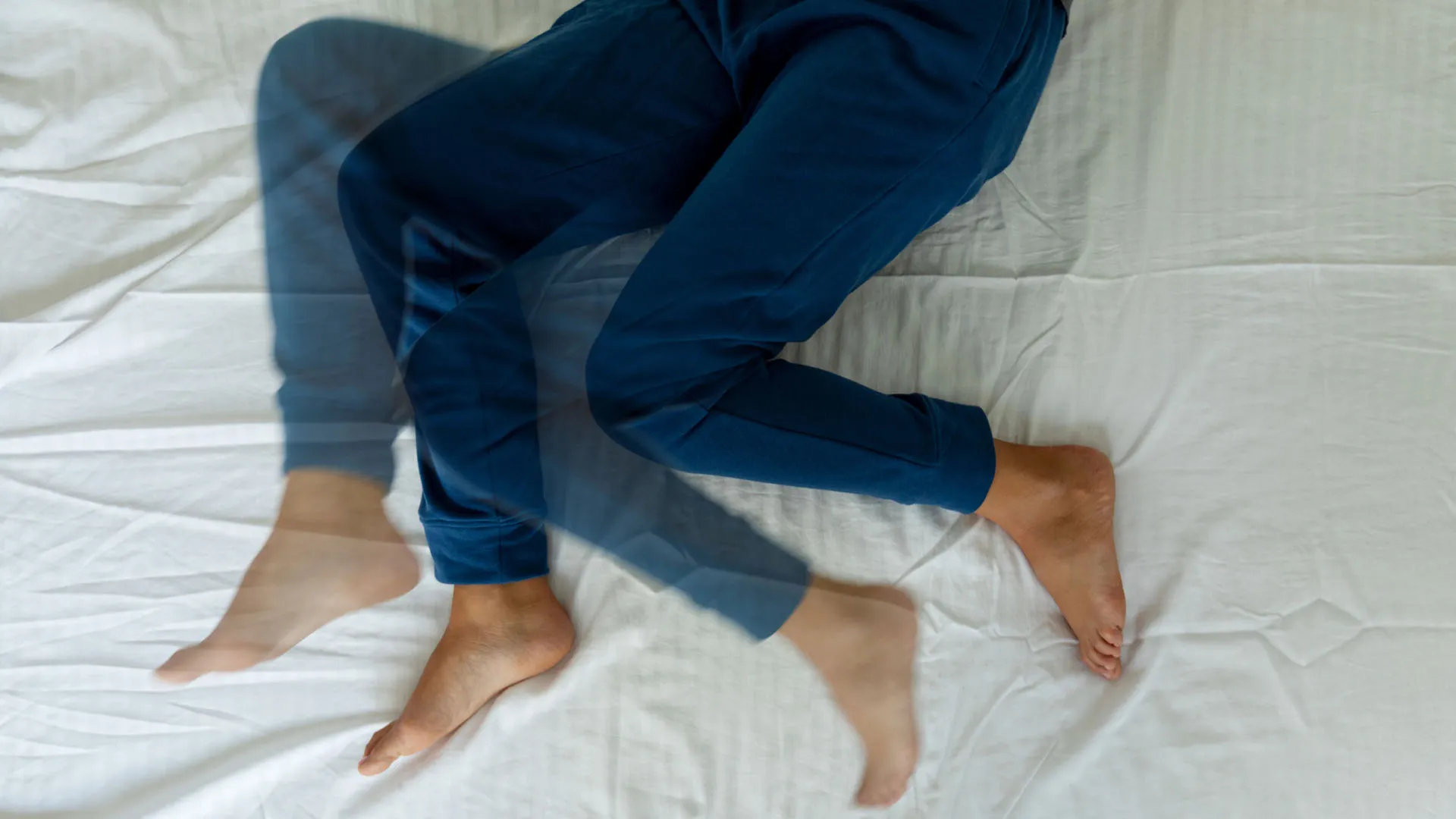
Restless legs syndrome (doctors also call it Willis-Ekbom disease) is a nervous system condition. It causes uncomfortable feelings deep in the legs: crawling, pulling, buzzing, or an itch you can’t scratch. Along with those feelings comes a strong urge to move. Symptoms get worse when you sit or lie still, especially in the evening, and ease when you walk.
Many people with restless legs also have small, repeated leg jerks during sleep. Their partner often notices before they do.
The root problem seems to be how the brain handles dopamine (a chemical messenger that helps control movement) and iron. Brain iron can run low even when a standard blood test looks fine.
Common triggers include low iron, pregnancy, kidney disease, nerve damage in the feet, and certain medications. Sedating antihistamines like diphenhydramine (the active ingredient in many nighttime sleep aids) are frequent offenders. Caffeine, alcohol, nicotine, and short sleep can all make it worse.
Because this isn’t a muscle problem at its core, rubbing or stretching the legs only helps for a while. That’s an important clue for treatment.
Does Acupuncture for Restless Legs Actually Work?
Acupuncture for restless legs shows promise, but the evidence isn’t strong yet. A 2021 review of 18 studies found acupuncture often reduced symptoms and improved sleep compared with medication alone. Most of those studies were small and loosely designed, though. It’s a reasonable option to try alongside medical care, not instead of it.
That 2021 review and meta-analysis pooled results from more than 1,000 patients. Many studies compared acupuncture with levodopa, a dopamine medication. The few studies that used the standard restless legs severity questionnaire showed meaningful drops in scores. Still, the authors called for better trials that compare real acupuncture with a sham (fake) version.
We want to be straight with you. Acupuncture isn’t a standard recommendation from major American medical groups. The American Academy of Sleep Medicine’s 2024 restless legs guideline puts iron and a group of medications called gabapentinoids first. It also steers doctors away from routine use of dopamine drugs, because over time they can cause augmentation, which means symptoms start earlier in the day and get stronger.
How Can Needles in Your Legs Calm Restless Legs?
Acupuncture sends steady signals through the nerves of the lower leg to the spinal cord and brain. That input can quiet the uncomfortable sensations, trigger the release of natural pain relievers like endorphins, and relax tight calf muscles. It can also help you fall asleep faster, which matters because poor sleep makes restless legs worse.
Here’s where it gets interesting. Researchers have tested a wearable device that stimulates the peroneal nerve, which wraps around the outside of the leg just below the knee. In a sham-controlled trial of 133 people with severe restless legs, 45% of those using the real device improved a lot, compared with 16% using a fake one.
That doesn’t prove acupuncture works. It does show that steady input to the lower-leg nerves can calm restless legs, and those are the same nerves we often target. When we add gentle current to the needles, the effect is similar to what electro-acupuncture does for nerve pain: stronger, steadier signals than a needle alone.
Acupuncture also nudges the body into its “rest and digest” mode, the calm state run by the parasympathetic nervous system. For people who dread lying down at night, that matters.
What a Restless Legs Session Looks Like at LycoAcu
Your first visit starts with questions. With an RN’s clinical background, we ask about your iron levels, medications, sleep, and caffeine habits. We also check for signs of nerve damage in the feet, since burning or numbness can overlap with restless legs. If that sounds familiar, our approach to nerve damage in the feet may apply to you too.
Next, we place thin needles below the knee near the peroneal nerve, along the shin and calf, and near the inside of the ankle. We often connect a few of them to a gentle electrical current. You rest for 20 to 30 minutes, and plenty of patients fall asleep on the table. If needles make you nervous, here’s an honest look at whether acupuncture hurts.
Most people start with one or two sessions a week for four to six weeks. Late-day appointments can work well, since symptoms build in the evening. We may also show you a simple calf and shin massage to do before bed.
We’ll ask you to track how many nights you had symptoms and how long it took to fall asleep. If you want a sense of timing, we’ve explained how many acupuncture sessions it takes to see results for most conditions.
Who Is a Good Fit for Acupuncture for Restless Legs?
Acupuncture for restless legs is a good fit if your symptoms are mild to moderate, your iron has been checked, and you want to add support to your current plan or lean less on medication. It’s also worth trying if medication caused side effects or stopped working as well as it once did.
If you think your medication is losing its effect, talk to your doctor before changing anything. Never stop a restless legs medication on your own. If you’re pregnant (restless legs is common late in pregnancy), check with your OB first, and we’ll adjust our approach.
It also helps to rule out a look-alike. Night cramps are painful knots that lock up a muscle. Restless legs is an urge to move, not a cramp. If tight, crampy calves are part of your picture, our approach to calf pain and tightness can fit into the same treatment plan.
What Helps Restless Legs Between Sessions?
Between sessions, the biggest wins usually come from checking your iron, cutting back on evening caffeine and alcohol, and moving your legs before bed. A warm bath, a short evening walk, and gentle calf stretches can quiet symptoms. Ask your doctor whether any of your medications could be making things worse.
Iron deserves the first look. Sleep specialists now treat iron levels that some labs still call “low normal,” so ask your doctor about a ferritin test. Avoid iron supplements and red meat for two days before the blood draw, since they can skew the result.
Temperature can help as well. Some people get relief from a warm bath or heating pad on the calves before bed, while others prefer a cool pack. Try both and see which one your legs respond to.
A few habits help too. Keep a steady bedtime, since short sleep fuels symptoms. If you have to sit through a long drive, flight, or movie, plan short walking breaks. Some patients do best with a mentally engaging task, like a crossword, when they have to sit still.
When Restless Legs Need a Doctor First
See a doctor promptly if symptoms appear suddenly, spread to your arms, or start earlier in the day than they used to. Numbness, weakness, or burning in the feet also needs a medical workup. If one leg becomes swollen, red, warm, and painful, get urgent care right away, because that can signal a blood clot.
Calmer Legs and Better Sleep Are Possible
Restless legs is a nervous system condition, so the best results come from tackling it on several fronts. Get your iron checked, review your medications with your doctor, and build a few evening habits. Acupuncture can be a gentle, drug-free addition that targets the nerves involved and helps you sleep.
At Lycoming Orthopedic & Sports Acupuncture, we’ll work alongside your doctor to build a plan that fits you. Learn more about our acupuncture treatment, our electrostimulation options, and what to expect at your first visit. Contact us or call 570-244-4188 to schedule.