TL;DR: Acupuncture needles are about as thick as a human hair, and most people feel little or nothing when one goes in. What you may notice is a dull, heavy ache around the needle after it’s placed. That sensation usually fades within seconds. Mild soreness the next day is normal. Sharp, lasting pain is not, and you should tell your acupuncturist right away if you feel it.
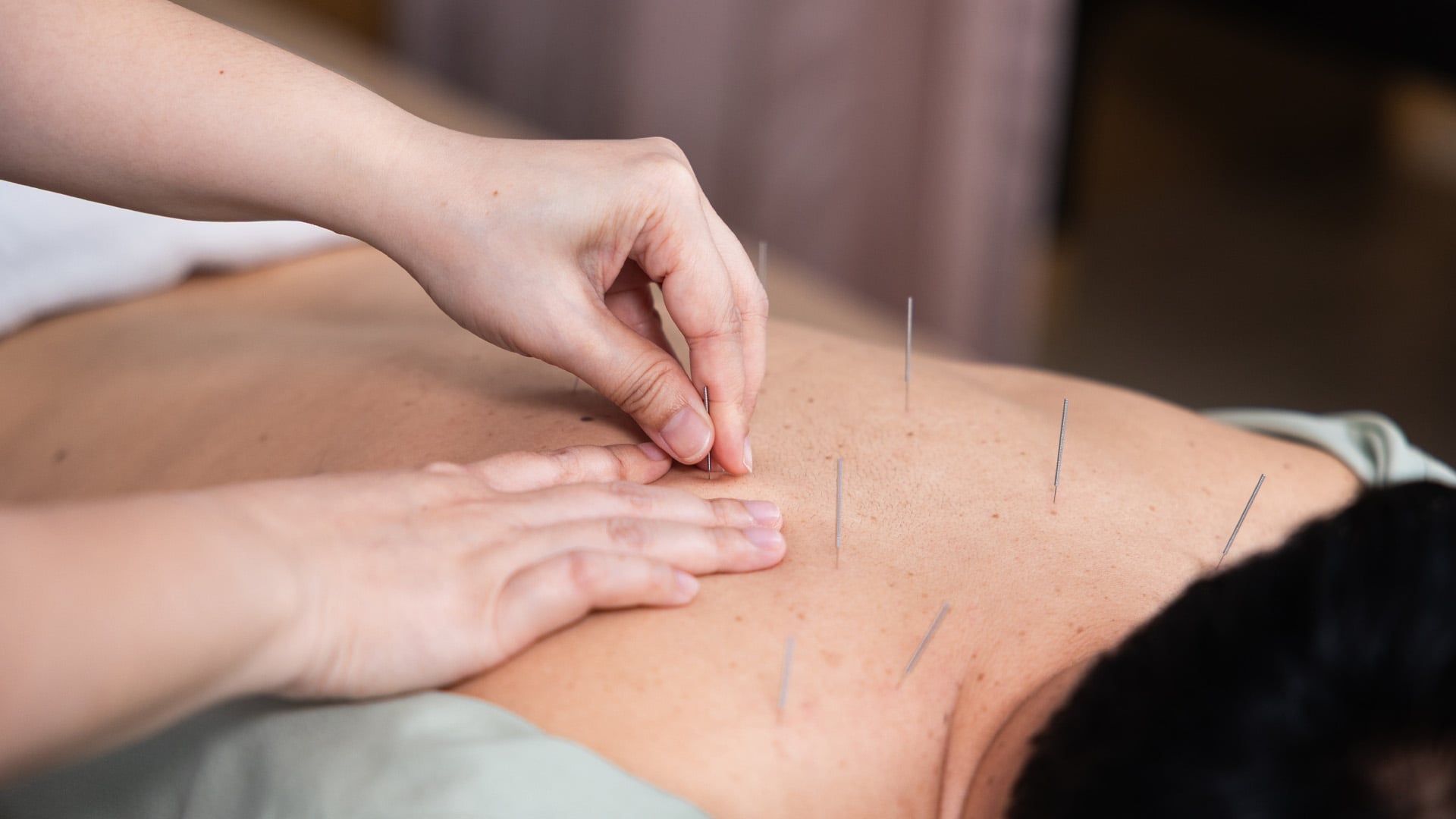
For most people, acupuncture doesn’t hurt. The needles we use measure roughly 0.16 to 0.25 mm across, thin enough that a dozen of them would fit inside the opening of a needle used to draw blood. Most patients feel a light tap as the needle passes the skin, and a fair number feel nothing at all.
That said, the honest answer has more texture to it. What you feel depends on where on your body we’re working, which technique we’re using, and how irritated the muscle is that day. A needle placed in your forearm to calm a tight muscle feels different from one placed in the sole of your foot. Below, we’ll walk through what each sensation means, which spots tend to run more sensitive, why orthopedic work can feel stronger than a general session, and when discomfort is worth speaking up about.
How Thin Is an Acupuncture Needle, Really?
An acupuncture needle is between 0.16 and 0.30 mm in diameter, roughly the width of two human hairs. A needle used for a flu shot is around 0.8 mm and hollow, with a cutting bevel at the tip. Acupuncture needles are solid and taper to a rounded point, so they part the tissue instead of slicing it.
That design difference explains most of what patients report. A hollow needle has to cut a channel wide enough to push fluid through. Ours doesn’t. There’s nothing being injected, so there’s no pressure building under the skin and no stinging as tissue stretches to accommodate it.
We also use a small guide tube for placement. It presses the skin flat and lets us tap the needle through the surface layer quickly, which is where nearly all of your pain receptors sit. The faster the needle clears that layer, the less you register.
If you’re curious about what happens past the surface, we’ve written about how far the needle actually travels into the tissue and why depth varies so much from the shoulder to the ankle.
What Does Acupuncture Feel Like Once the Needle Is In?
Most patients describe a dull, spreading heaviness around the needle, sometimes with a mild ache or a warm feeling. It usually arrives a second or two after placement and settles within about ten seconds. It isn’t sharp, and it doesn’t feel like a cut or a burn. Many people find it oddly relaxing once they know what it is.
This sensation has a name in the field, and it tells us the needle has reached the tissue we were aiming for. Physiologically, we’re stimulating nerve fibers in the muscle and connective tissue. That signal travels to the spinal cord and brain and prompts the release of endorphins and other pain-dampening chemicals, along with a local increase in blood flow.
Some people feel almost nothing during a session and still get excellent results. Strong sensation isn’t a requirement for the treatment to work.
Occasionally a needle produces a quick zing, like mild static. That means we’ve brushed a sensitive nerve branch. We move the needle a few millimeters and the feeling stops.
Why Acupuncture Hurts More in Some Spots Than Others
Nerve endings aren’t spread evenly across the body. Your palms, soles, and the area around the ankles carry far more of them per square inch than your back, glutes, or thighs. Your hands and feet need fine sensation, and they got wired accordingly.
So a needle in the upper trapezius, sitting over thick muscle, tends to register as pressure. A needle near the base of the thumb can produce a genuine pinch for a second. Neither means something went wrong. It’s anatomy.
The condition of the muscle matters too. A muscle that’s been guarding an injury for weeks is chemically irritated and mechanically tight. Needling it produces more sensation than needling a healthy muscle right next door. Patients often tell us the achy spot they felt most was exactly the spot that’s been bothering them, which is usually a good sign we found the right target.
Bruising happens occasionally, most often in the forearms, shins, and around the eyes where vessels sit close to the surface. It’s minor and clears in a few days. We cover this in more detail in our piece on whether needles cause bleeding or bruising.
Does Orthopedic Acupuncture Hurt More Than a Relaxation Session?
Sometimes, yes, and we’d rather tell you that up front. Orthopedic acupuncture targets specific dysfunctional muscles and the motor points where nerves meet muscle fibers. When we hit one accurately, the muscle can give a brief involuntary twitch, which feels like a quick cramp that releases in a second or two.
That twitch is the point of the technique. A muscle stuck in a shortened, guarded state doesn’t relax on its own just because you stretch it. Stimulating the motor point interrupts the loop that’s holding it there, and the muscle lets go. Patients frequently report the treated area feels looser before they’ve even left the table.
We run a full strength assessment before any of this so we’re needling muscles that actually tested weak or inhibited, not just wherever it happens to hurt. That’s the difference between a targeted session and a scattershot one. If you want the longer explanation, our overview of how orthopedic work differs from general acupuncture covers the assessment process.
When we add electrical stimulation to the needles, the sensation shifts again. It becomes a rhythmic tapping or pulsing rather than an ache, and we set the intensity with you, not for you. Most patients settle on a level that feels strong but comfortable, and we can turn it down at any point.
Will You Be Sore After Acupuncture?
Some soreness in the day or two after treatment is common and normal, especially after your first session or after work on a chronically tight area. It usually feels like the deep, satisfying ache you get the day after a hard workout, not like a fresh injury. Most people find it fades within 24 to 48 hours.
Heat helps, and so does gentle movement. Staying hydrated and skipping a brutal training session that same evening keeps it to a minimum.
What we don’t expect is soreness that worsens each day, spreads well beyond the treated area, or comes with swelling and redness. That’s uncommon, and it’s worth a phone call. Our article on what normal post-treatment soreness looks like goes through the timeline in more detail.
How to Make Your First Session More Comfortable
A few practical things make a real difference, and most of them are about your nervous system rather than the needles.
- Eat something an hour or two beforehand. Coming in on an empty stomach is the most common reason people feel lightheaded.
- Wear loose clothing so we can reach the shoulders, forearms, knees, and lower legs without a struggle. Our guide on what to wear to your appointment has specifics.
- Say something if you’re nervous about needles. We can start with fewer of them, use shallower placements, and build from there.
- Breathe out as the needle goes in. Tense muscles are more sensitive than relaxed ones, and holding your breath tenses everything.
- Skip the heavy caffeine right before. It winds up the nervous system and makes sensation register louder.
First sessions often feel more intense than later ones, largely because of anticipation. By the third visit, most patients report less sensation from the same technique. The rest of the preparation is in our notes on getting ready for your appointment.
When Discomfort Is a Signal to Speak Up
Say something the moment anything feels sharp, burning, electric, or simply wrong. We can adjust or remove a needle in about two seconds, and no explanation is needed. You’re not interrupting anything and you’re not being difficult.
Real red flags are rare with a licensed practitioner, but they’re worth naming: pain that intensifies rather than settling, shortness of breath, or a sensation that shoots down a limb and doesn’t resolve when the needle comes out. In twenty years of practice these come up almost never. Still, we’d rather you know what to watch for.
The best sessions are the ones where you talk to us. Your feedback tells us whether we found the right muscle and where to go next.
The Bottom Line
Acupuncture is far more comfortable than most people expect before their first visit. The needles are hair-thin and solid, the sensation is usually a brief dull ache rather than a sting, and any soreness afterward resembles a good workout more than an injury. Where orthopedic work does produce a stronger response, that response is doing something useful.
If nerves about needles have kept you from trying it, we’d like the chance to change your mind. At LycoAcu, we start every relationship with an assessment and a conversation, not a tray of needles. Learn more about our approach to acupuncture and orthopedic acupuncture, see what to expect on a first visit, or get in touch and ask us anything before you book.